How to check a mortgage broker's licence
By Nathan Ellis · Updated 2026-07-10
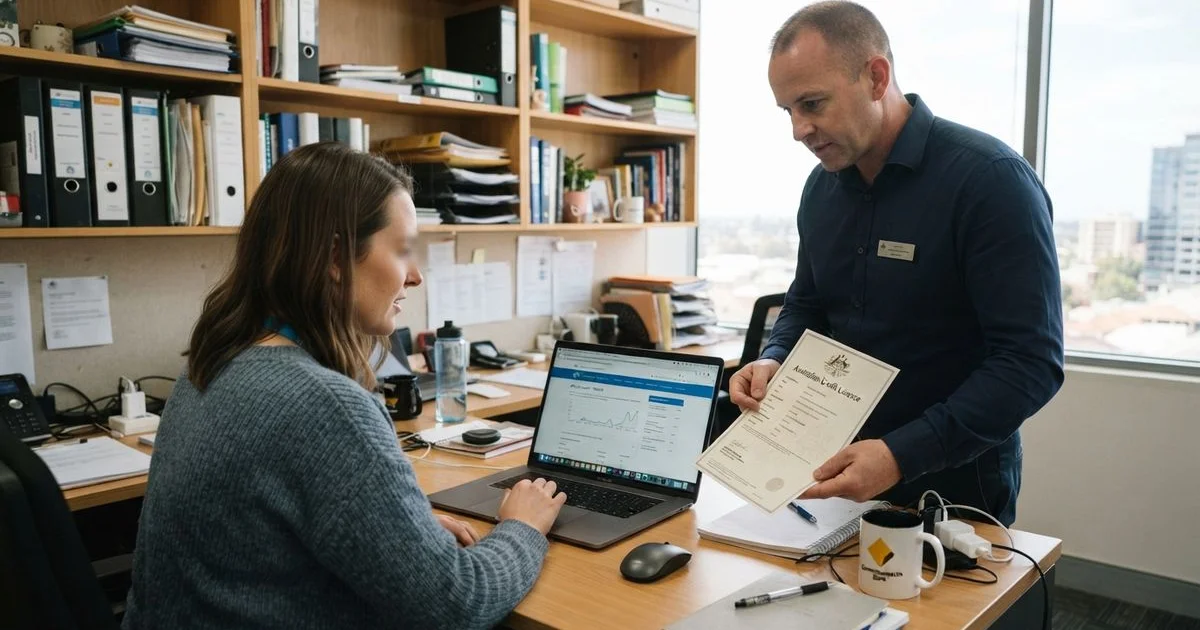
To check a mortgage broker’s licence, search their name, company name or licence number on the Professional Registers Search run by the Australian Securities and Investments Commission (ASIC). Every mortgage broker in Australia must be on the register in 1 of 2 ways: holding an Australian credit licence, or authorised as a credit representative of a licensee. The register is free to search and shows which one applies, and whether it is current.
The check takes 5 steps. Do it before you hand over payslips and bank statements, and do it for any broker, including those listed in our directory.
How to check a mortgage broker’s licence: 5 steps
An Australian credit licence search on ASIC’s register takes 5 steps:
- Get the number. Ask the broker for their Australian credit licence number, or their credit representative number and the licence they operate under. The law requires a broker’s credit guide to state the licensee’s Australian credit licence number.
- Open the register. Go to ASIC’s Professional Registers Search. You can search by individual or company name, registration or licence number, ACN or ABN, and most information is free.
- Pick the right register. Filter to credit licensees or credit representatives. ASIC notes a person or organisation may have more than 1 registration, so check the result is on the register you want.
- Check the status and the details. Confirm the licence or authorisation is current, and that the name matches the person and business you are dealing with.
- Check the banned list. Search ASIC’s banned and disqualified registers for people and organisations barred from the credit industry.
ASIC processes changes to the professional registers once a day, and a timestamp shows when the register was last updated.

Credit licence or credit representative: what you will see
A mortgage broker shows up on ASIC’s register in 1 of 2 ways, and both are legal.
| On the register as | What it means | What to check |
|---|---|---|
| Australian credit licensee | The business holds its own Australian credit licence from ASIC | The licence is current and the name matches the business |
| Credit representative | The broker is authorised to act under another business’s credit licence | The authorisation is current, and which licensee it is under |
ASIC says you need a credit licence to engage in credit activities, unless you are exempt or authorised as a representative of a credit licensee. Credit activities include suggesting or assisting with a credit contract and acting as an intermediary between a credit provider and a consumer, which is what a mortgage broker does (ASIC).
If your broker is a credit representative, note the licensee’s name. Where a representative acts for only 1 licensee, the Act makes that licensee responsible to you for the representative’s conduct (section 75). A credit representative must also give you the licensee’s credit guide along with their own.
What a credit licence does not guarantee
A current credit licence tells you the broker is allowed to give you credit help and is bound by the rules that come with it. It is a minimum standard, not a quality rating. ASIC itself says licensing is a point-in-time assessment of the licensee, not of its owners or employees, and that holding a credit licence does not guarantee the probity or quality of the licensee’s services.
4 obligations come with the licence, and they are what protect you.
- The best interests duty means a mortgage broker must act in your best interests and put your interests first when there is a conflict (National Consumer Credit Protection Act, section 158LA). Our guide to the best interests duty explains it.
- The complaints scheme rule means a credit licensee must be a member of the Australian Financial Complaints Authority (AFCA). A licensee cannot authorise a credit representative who is not a member (National Consumer Credit Protection Act, sections 47 and 64). AFCA’s free service is your route if a complaint is not resolved.
- The training standard in ASIC’s guidance says brokers who give home loan credit assistance need at least a Certificate IV in Finance and Mortgage Broking. They also need at least 20 hours of continuing professional development a year (ASIC RG 206).
- The disclosure rules mean the broker must give you a credit guide and tell you how they are paid. Our guide to how mortgage brokers get paid covers what you should receive.
Check AFCA membership too
Checking AFCA membership is a second, independent check on a mortgage broker. AFCA says it is compulsory for all licensed financial services providers in Australia to be AFCA members, and you can check whether a firm is a member with its online find a financial firm search. A broker’s credit guide must also give AFCA’s contact details.
Industry membership is not a licence
Membership of an industry body such as the Mortgage and Finance Association of Australia (MFAA) or the Finance Brokers Association of Australia (FBAA) is a separate step. The MFAA, for example, lists a Certificate IV and a Diploma of Finance and Mortgage Broking Management, plus AFCA membership, among its requirements. Treat membership as a supporting signal, but check the licence on ASIC’s register either way.
Red flags when checking a broker
Stop and ask questions if you see any of these 5 warning signs:
- The broker will not give you a credit licence or credit representative number.
- The name on the register does not match the broker or business you are dealing with.
- The licence or authorisation shows as cancelled, suspended or not current.
- The person or business appears on ASIC’s banned and disqualified registers.
- You are asked to pay a fee before the broker has provided any service. Moneysmart says a broker is not entitled to request payment of a fee before providing their services.
If something does not check out, do not proceed with that broker.
Finding a licensed broker in Perth
434 businesses are listed in our Perth mortgage broker directory. Run the same check on any of them before you share your documents, then use our questions to ask a mortgage broker to see how they will handle your loan.
Checked against ASIC, Moneysmart, AFCA and the National Consumer Credit Protection Act on 26 September 2026. This is general information, not legal or financial advice.
Frequently asked questions
How do I check a broker is licensed?
Check a mortgage broker in 5 steps, starting with a search of the broker’s name, company name, licence number, ACN or ABN on ASIC’s Professional Registers Search. It shows whether they hold an Australian credit licence or are a credit representative of a licensee, and whether that licence or authorisation is current. Most information on the register is free.
What is an Australian credit licence?
An Australian credit licence is a licence from ASIC, under the National Consumer Credit Protection Act 2009, that allows a person or company to legally engage in credit activities, according to Moneysmart. That includes assisting with a credit contract or acting as an intermediary between a lender and a borrower, which is what a mortgage broker does.
What is a credit representative?
A credit representative, 1 of the 2 ways a broker can be licensed, is a person or business authorised to engage in credit activities under another business’s Australian credit licence. Check the credit representative number on ASIC’s register and note which licensee it is under.
Where do I find a broker’s credit licence number?
Ask the broker, or check their credit guide. Section 113 of the National Consumer Credit Protection Act requires a credit guide to specify the licensee’s Australian credit licence number. Many brokers also show it on their website.
Does a licence mean the broker is good?
No. A licence is 1 check, not a quality rating: ASIC says licensing is a point-in-time assessment and does not guarantee the probity or quality of a licensee’s services. A licence confirms the broker can legally help you and must follow rules such as the best interests duty. Quality still needs checking through questions and reviews.
Do mortgage brokers need qualifications?
Yes. ASIC’s guidance says brokers who give home loan credit assistance need at least a Certificate IV in Finance and Mortgage Broking and at least 20 hours of continuing professional development each year.
Frequently asked questions
- What's the difference between a credit licence and a credit representative?
- An Australian Credit Licence (ACL) holder is directly authorised to provide credit assistance. A credit representative operates under someone else's licence rather than holding their own. Both are legitimate, but you should be able to see which applies and who the authorising licensee is.
- Where do I check if a broker is licensed?
- ASIC maintains a public register of credit licensees and credit representatives, searchable by name or licence number. A legitimate broker should be able to give you their ACL or credit representative number without hesitation.
- Is being a member of an industry association proof of a licence?
- It's a positive sign, since most reputable industry bodies require licensing as a condition of membership, but it's not the same as verifying the licence itself. Treat it as supporting evidence, not a substitute for checking the register.
- What if a broker won't share their licence details?
- That's a clear red flag. A properly licensed broker should be comfortable sharing this information, since it's public anyway. Hesitation or vague answers are a reason to look elsewhere.